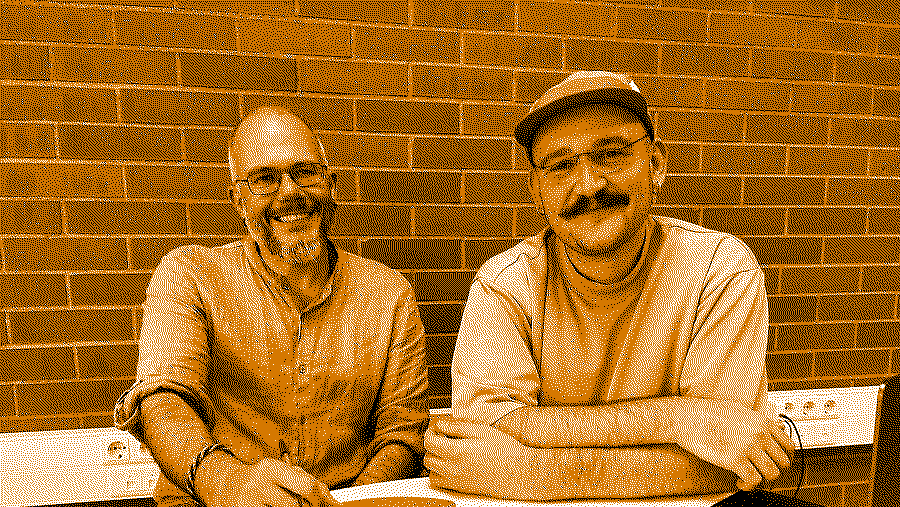
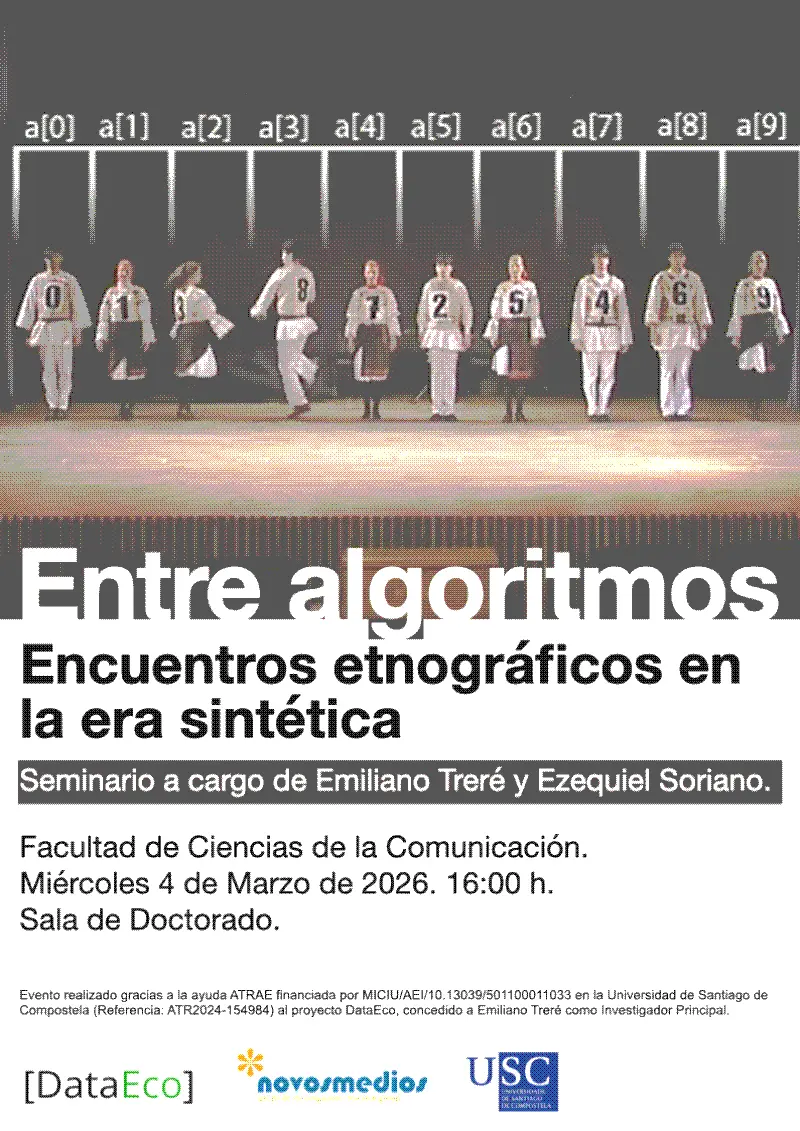
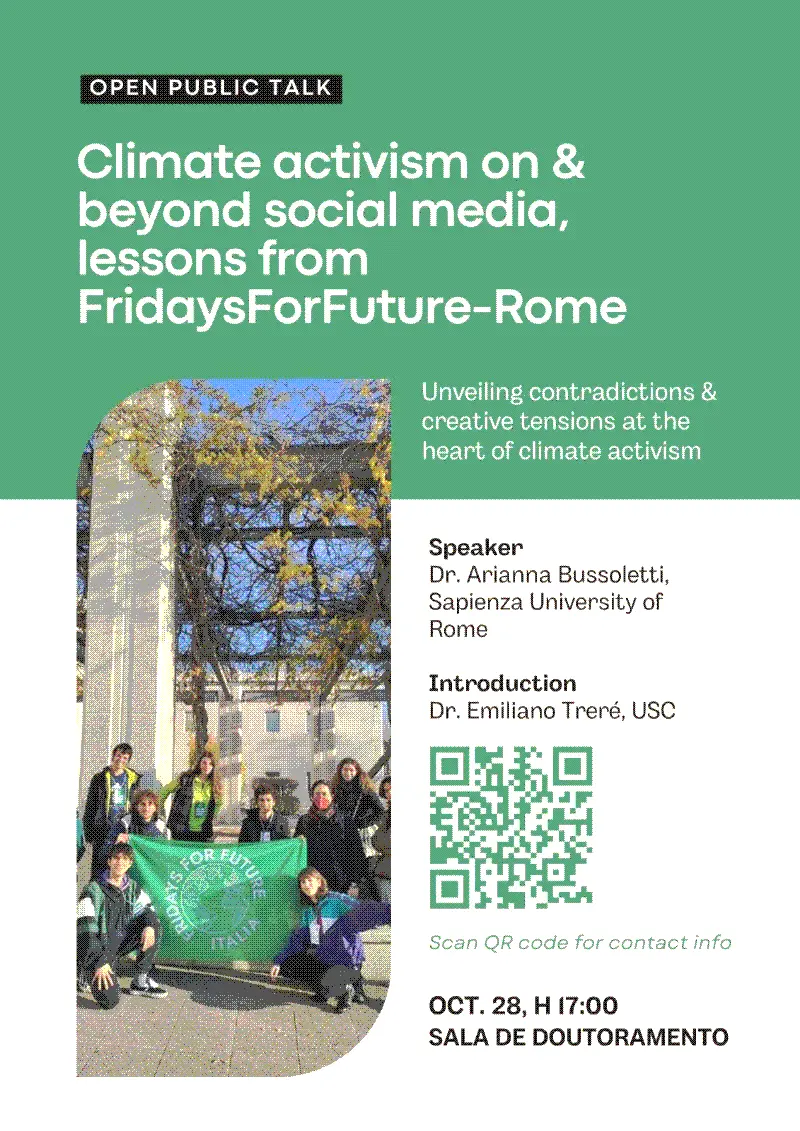
Data centres are not merely technical infrastructures, but spaces where broader social, political, and ecological tensions become visible. Conflicts surrounding these infrastructures are linked to extractivism, energy consumption, and the climate crisis, highlighting the material limits of the digital world. It is within this context that the project “Data Ecologies: Exploring Forms of Environmental Activism Through and Against Data in the Platform Society” (DataECO) (ATR2024-154984) operates. At the University of Santiago de Compostela (USC), the project is being developed by researchers Emiliano Treré and Ezequiel Soriano and is funded by the Spanish Ministry of Science, Innovation and Universities and the State Research Agency (MICIU/AEI/10.13039/501100011033), as part of the ATRAE programme.
Far from being abstract, the researchers explain, “data depend on resource-intensive infrastructures whose expansion raises urgent questions about sustainability, territory, and governance.” In this context, DataECO focuses on an emerging phenomenon: the debate around supposed “solutions” to the ecological impact of digitalisation. Rather than adopting purely technical or diagnostic approaches, the project critically examines the alternatives proposed by different actors, from corporate strategies based on energy efficiency and so-called “green” algorithms, to technological proposals such as DNA data storage, as well as more radical approaches such as the deliberate reduction of technological use (decomputing) and perspectives on environmental and data justice promoted by social movements. “Far from being neutral, these solutions can function as strategies for adapting to, legitimising, or displacing the problem, becoming a site of contestation over the limits and future of digitalisation,” Treré and Soriano argue.
Using a comparative approach focused on Spain, Italy, Ireland, and Chile, DataECO combines digital ethnography, interviews, and content analysis to develop an innovative interdisciplinary framework for understanding environmental activism in the context of the current data centre boom. Its aim is to generate knowledge that is useful not only to the academic community, but also to activists, policymakers, and citizens interested in understanding the real impact of digital infrastructures on the climate emergency.
Link to the original press release (Galician): https://www.usc.gal/gl/xornal/novas/proxecto-dataeco-aborda-impacto-real-infraestruturas-dixitais-emerxencia-climatica